BantUGent members contribute to a special issue on Bantu auxiliary verb constructions

BantUGent members contribute to a special issue of the Nordic Journal of African Studies, dedicated to the study of auxiliary verb constructions in Bantu languages. The issue, consisting of nine papers and an introduction, studies the syntax, semantics and diachronic development in Bantu languages spoken in different areas from different angles. Elisabeth Kerr’s paper investigates the status of pre-stem inflectional morphemes in Northwestern Bantu languages, and whether they should be considered as separate words, and therefore auxiliaries, or phonologically dependent, suggesting a more synthetic structure. Aron Zahran, Maud Devos and Rozenn Guérois’ paper focuses on the grammaticalization of negative auxiliaries in zone M, N and S languages spoken on the Middle and Lower Zambezi. The special issue was edited by Rasmus Bernander, Eva-Marie Bloom Ström, Thera Marie Crane, Ponsiano Kanijo, and BantUGent member Hilde Gunnink. The special issue is available open access.

Lis Kerr and Paulin Baraka Bose conduct research stays at CNRS-LLACAN

BantUGent members Lis Kerr and Paulin Baraka Bose conducted research stays at the French National Centre for Scientific Research (CNRS) research unit Langage, langues et cultures d’Afrique (Languages and cultures of Africa; LLACAN), in Paris/Villejuif.
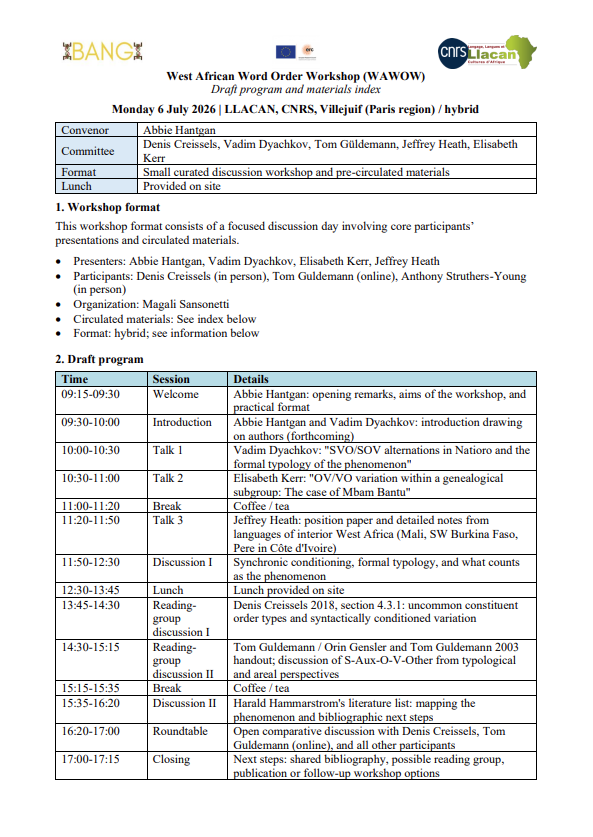
Lis Kerr spent November 2025 – February 2026 as an invited researcher at LLACAN under a research mobility grant from the FWO, working on variation in Cameroonian Bantoid verb forms as part of her ongoing FWO-MBAM postdoctoral project. While in Paris she gave the following talks at CNRS:
Paulin Baraka Bose visited LLACAN from 31 January to 15 February 2026 as part of his PhD research within the CongUbangi project. The main objective of his stay was to further develop his research on the morphosyntax of Fulu, a Sara-Bongo-Bagirmi (SBB) language spoken in the Democratic Republic of the Congo(DRC), with particular attention to the structure of the verbal system.
During his stay, he collaborated with Pascal Boyeldieu, a leading specialist of Sara-Bongo-Bagirmi languages and author of the reference monograph on Bagiro spoken in the Central African Republic (CAR). This collaboration allowed him to place his analysis of Fulu in a broader comparative perspective, especially through comparison with closely related Bagiro varieties spoken in both the CAR and the DRC.
This research visit further strengthened the collaboration between BantUGent and LLACAN and contributed to ongoing efforts to better document and understand the linguistic diversity of the Central Sudanic language family.
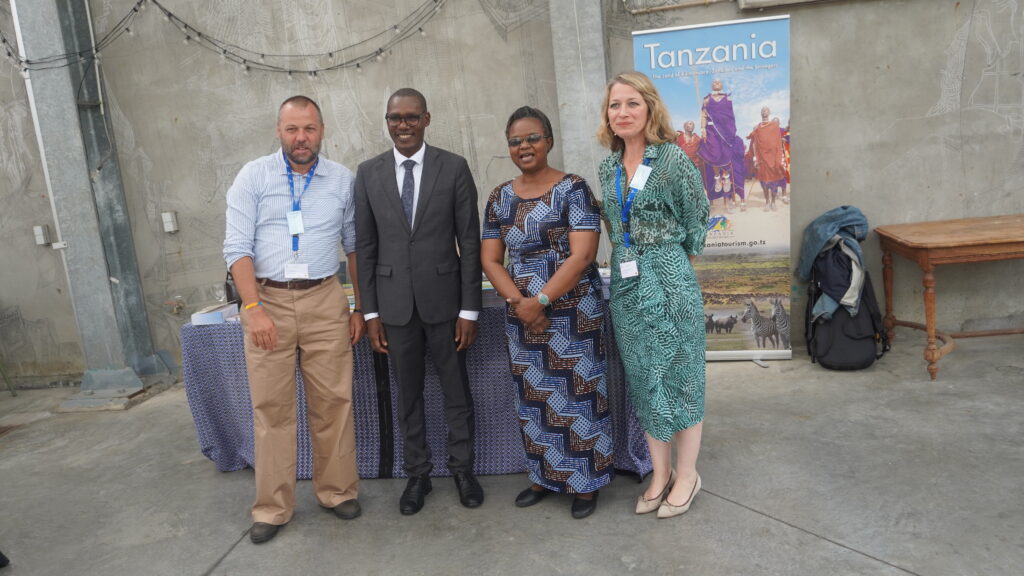
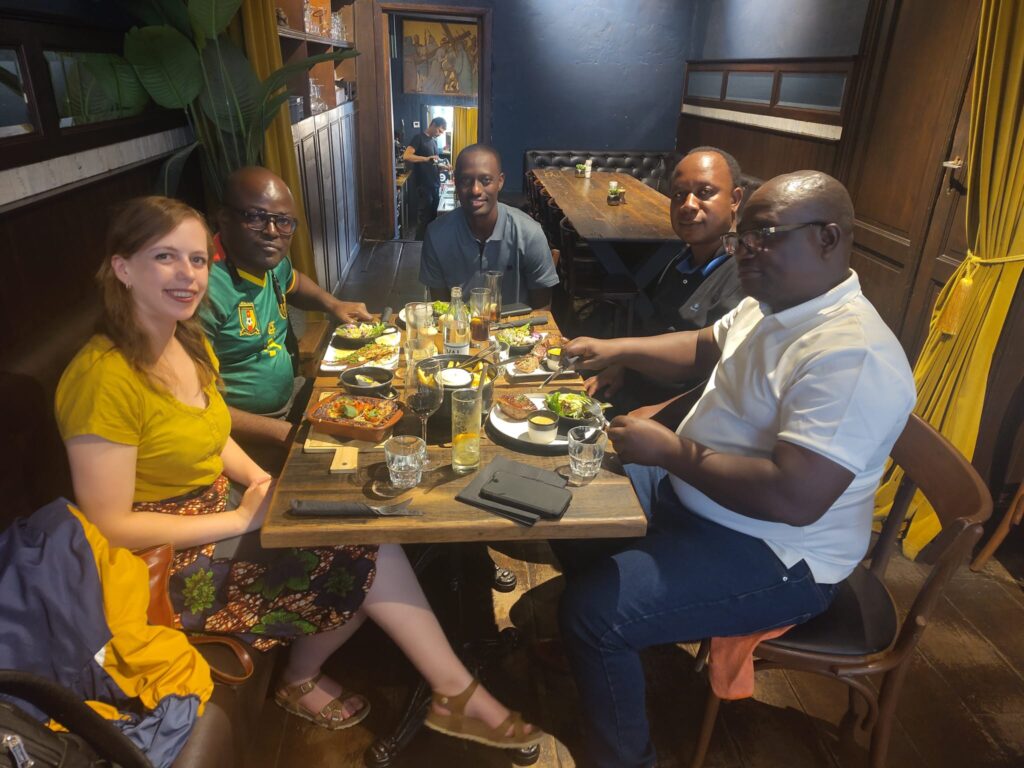
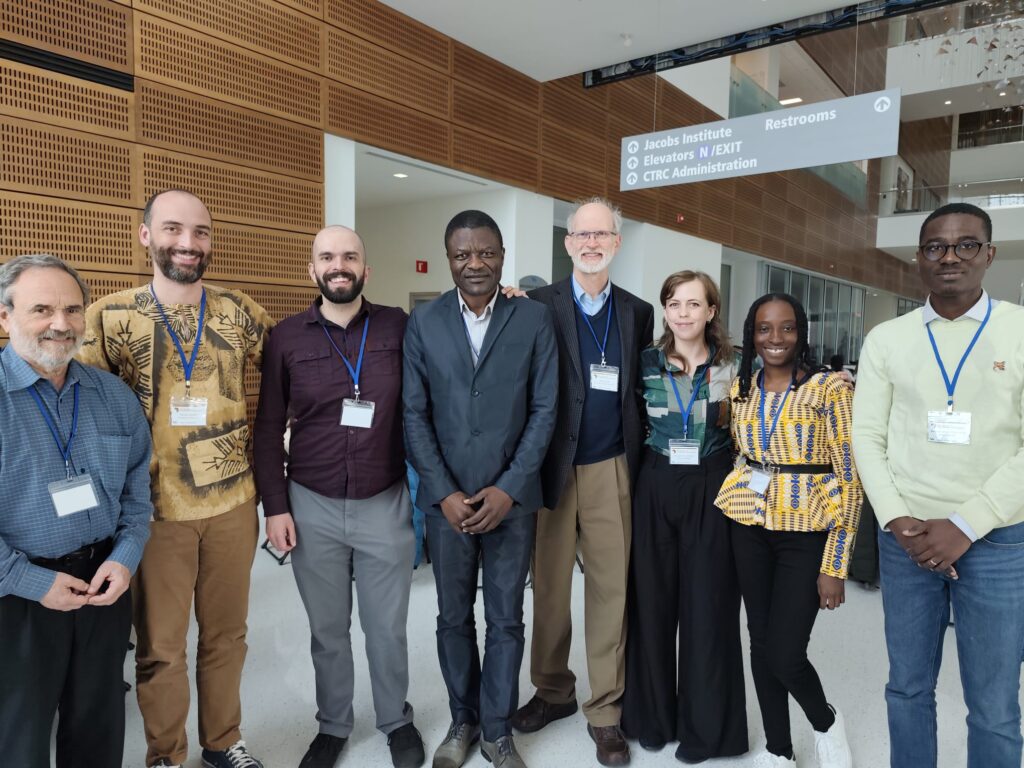
From left to right: Aron Zahran, Edward Ntonda, Paulin Baraka Bose and Lis Kerr, all affiliated to BantUGent, meet at LLACAN, Villejuif, Paris, february 2026

Sara Pacchiarotti keynote speaker at the Applicative Alternations Across Languages workshop in Cologne

Sara Pacchiarotti was invited as a keynote speaker at the second workshop of the DFG-funded project Applicative Alternations Across Languages which took place at the university of Cologne on February 19-20. She gave a talk titled “X, P ~X applicatives and their interaction with information structure in Eastern Bantu“. This talk showcased novel research by Bantu Gent members Ernest Nshemezina, Manoah Joel Misago (departed), and Koen Bostoen on the Bantu language Rundi.

Lorenzo Maselli returns to Bangui for a second field trip

Team member Lorenzo Maselli is currently back in Central African Republic, continuing the fieldwork started last year as part of a broader postdoctoral research programme on phonetic and phonological microvariation in the Ubangi region. This new field mission builds directly on the 2025 campaign, during which Lorenzo collected a rich body of electroglottographic (EGG) and other articulatory data. The present stay focuses on extending and consolidating these recordings, with particular attention to tone in the Bantu language Mpiemo. A first set of results from this year’s EGG recordings will be presented later this year at the 11th International Conference on Bantu Languages (Bantu11). Together, these field campaigns aim to establish a robust empirical foundation for integrating phonetic evidence into historical and typological research on Central African languages.

Lorenzo Maselli awarded prestigious Marie Skłodowska-Curie Global Fellowship

We are delighted to share that Dr. Lorenzo Maselli has been awarded a Marie Skłodowska-Curie Actions (MSCA) Global Fellowship, one of the most competitive individual fellowships funded by the European Union. Lorenzo’s project, “NGBU – Non-explosion and Glottalisation in the Basin of the Ubangi”, was selected with an exceptional evaluation score of 97.4%, placing it among the very top-ranked proposals in this year’s call.

MSCA Global Fellowships support outstanding postdoctoral researchers and allow fellows to undertake advanced research and training through an international mobility scheme, involving an outgoing phase outside Europe and a return phase at a European host institution.

NGBU investigates the phonetic, phonological, and historical dynamics of glottalisation and non-explosion in speech, focusing on the languages of the Ubangi River Basin in Central Africa. The project combines: instrumental phonetics (acoustics, electroglottography, aerodynamics, static palatography),
phonological modelling, microvariationist typology, and historical-comparative reconstruction, integrated with insights from archaeology and population genetics.

During the outgoing phase, Lorenzo will be hosted at The Research Institute for Languages and Cultures of Asia and Africa at Tokyo University of Foreign Studies, working under the supervision of Prof. Daisuke Shinagawa, a leading specialist in African linguistics and typological microvariation and long-standing friend of BantUGent.

The return phase will take place at Ghent University, within the BantUGent, under the supervision of Prof. Sara Pacchiarotti, whose ERC-funded “CongUbangi” project on the Congo-Ubangi region provides a strong interdisciplinary framework for the project’s diachronic component.

Congratulations to all parties involved in the project!

Sara Pacchiarotti strenghtens BantUGent collaboration in Central African Republic

From January 15 to 31, Sara Pacchiarotti, PI of the ERC-funded CongUbangi project, visited the Central African Republic to meet with several authorities at Bangui University and the Ministery of Higher Education, Scientific Research and Technological Innovation. During her stay, Sara was interviewed about the CongUbangi project by Radio Ndeke Luka.  The interview was broadcasted locally and online on Sunday February 1 as part of the “Magazine de Culture”, broadcast “100% Culture”. For more info, check here.

Sara with Prof Augustin Kongatoua Kossonzo, chief inspector of public education (first from left), Prof. Bernard Simiti, history and archaeology professor (second from left), and Prof. Jean Kokidé, Chief of Staff of the Ministry of Higher Education, Scientific Research, and Technological Innovation
Sara interviewed on the CongUbangi project at Radio Ndeke Luka


Koen Bostoen talks at Heinrich-Heine-University, Düsseldorf (Germany)

On November 7, 2025, Koen Bostoen (BantUGent) gave a talk titled “Reprobing the deep past of  the languages, peoples, cultures and environments  in the Kwilu-Kasai region of the Democratic Republic of the Congo” at the African languages colloquium of the Heinrich-Heine-University in Düsseldorf.

Lis Kerr gives talk at Bayreuth Tunen workshop (Germany)

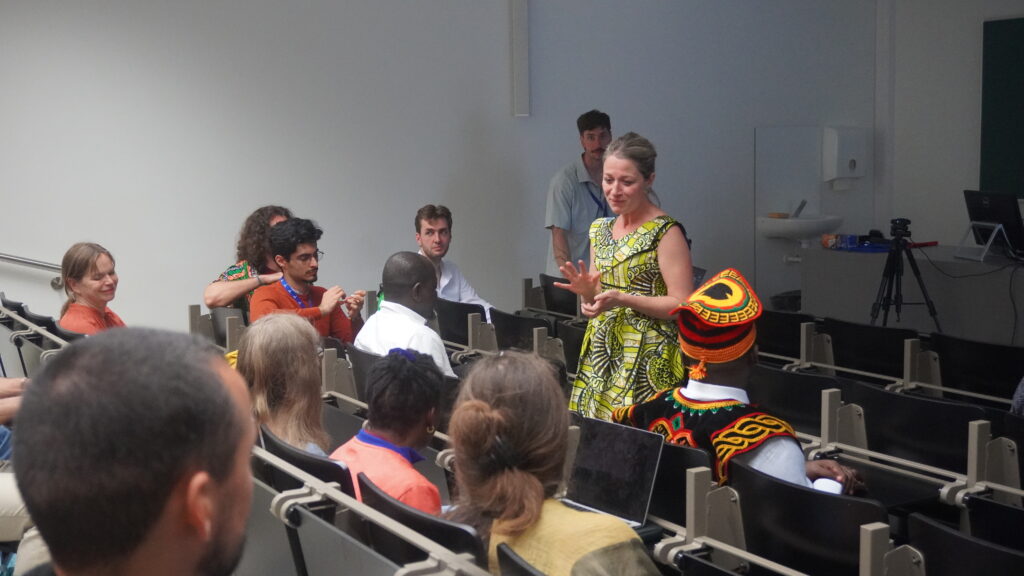
is Kerr gave an invited talk at a workshop on Tunen language and indigenous law held from 23rd – 24th October at Bayreuth University, speaking on “The Tunen language: Classification and key characteristics”. The workshop was organised as part of the postdoctoral research of Endurence Dissake on language use within customary court proceedings of the Banen of Cameroon.