At the 23rd Biennial International Conference of The African Languages Association of Southern Africa, which takes place at the University of the Western Cape September 21-24, Hilde Gunnink (BantUGent), Natalia Chousou-Polydouri (University of Zürich) & Koen Bostoen (BantUGent) will give a talk titled “The population history of Southern Africa: insights from linguistic subclassification“. The full draft program is available here.
Category: Uncategorized
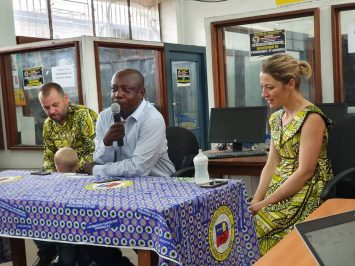
Sara Pacchiarotti and Koen Bostoen talk on Bantu Expansion at ISP-Gombe in Kinshasa
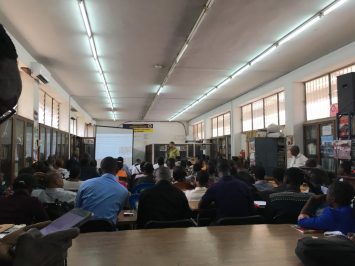
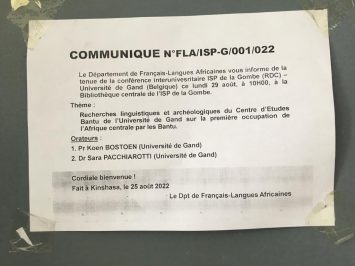
On August 29, 2022, Sara Pacchiarotti (BantUGent) and Koen Bostoen (BantUGent) were invited at the Institut Supérieur Pédagogique de la Gombe in Kinshasa to talk about BantUGent research on the Bantu Expansion. Their talk was titled “L’occupation ancienne de l’Afrique centrale par les Bantouphones: recherches linguistiques et archéologiques“. Prof. Jean-Pierre Donzo (ISP-Gombe & BantUGent associate) animated the talk and the lively debate that followed.
Sara Pacchiarotti & Koen Bostoen on fieldwork and teaching mission in Kikwit (DRC)
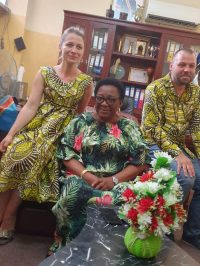
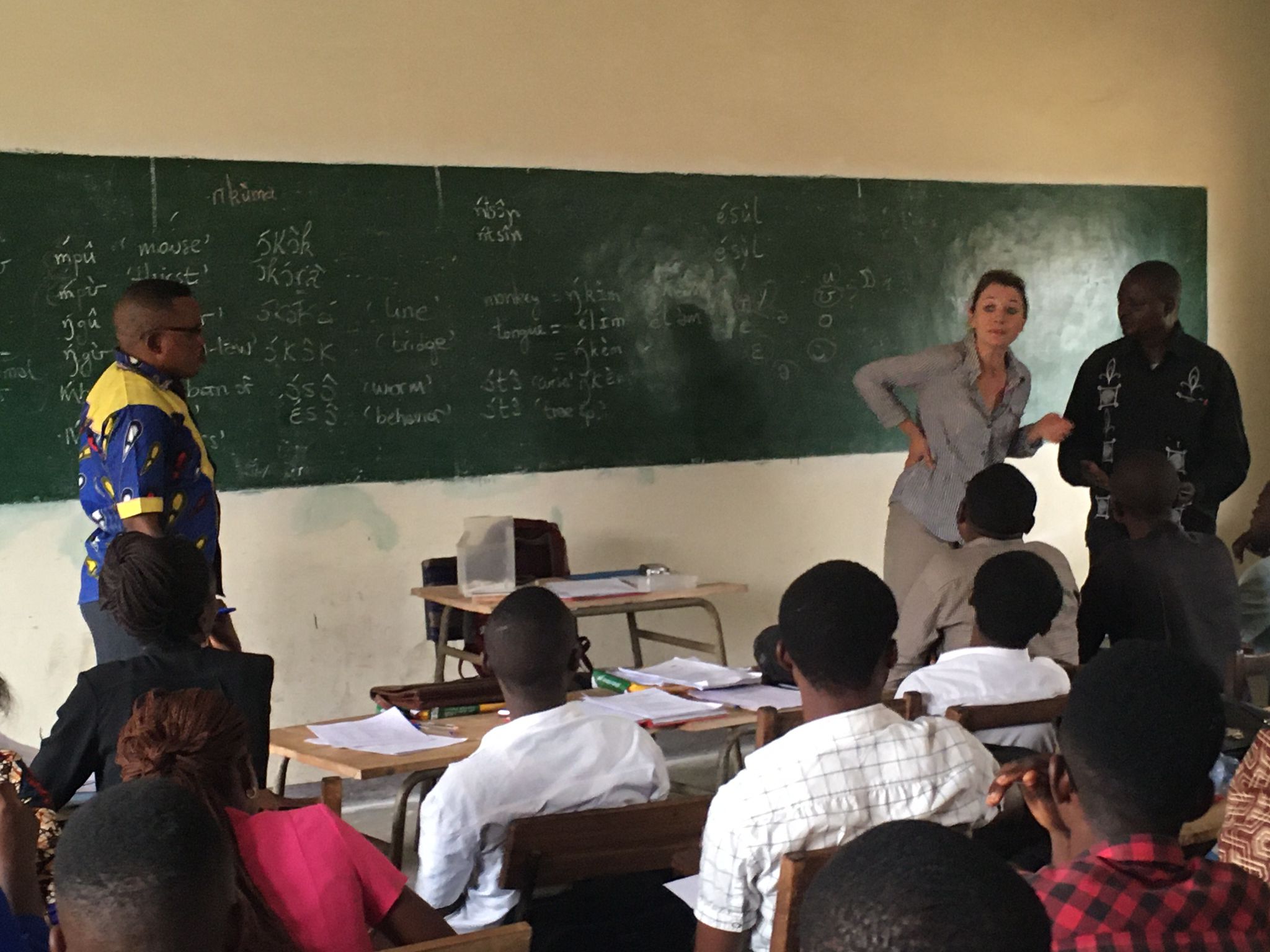
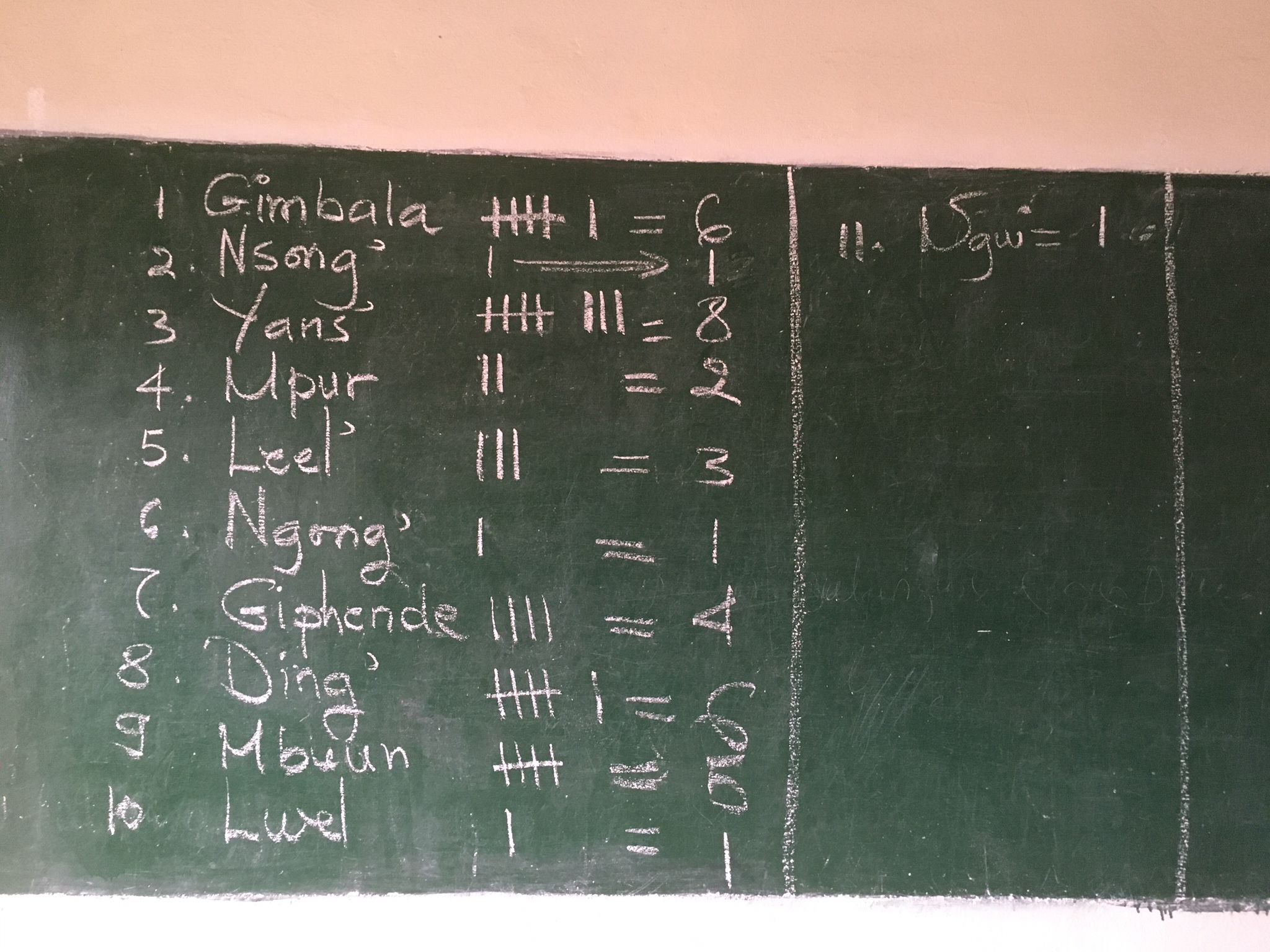
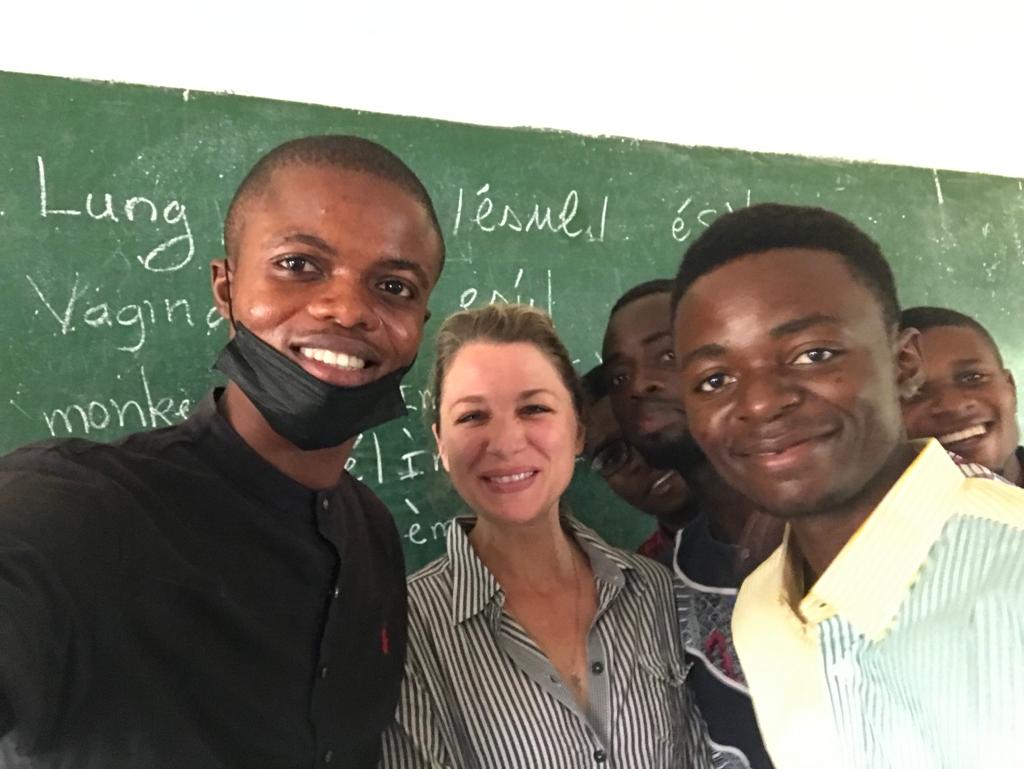
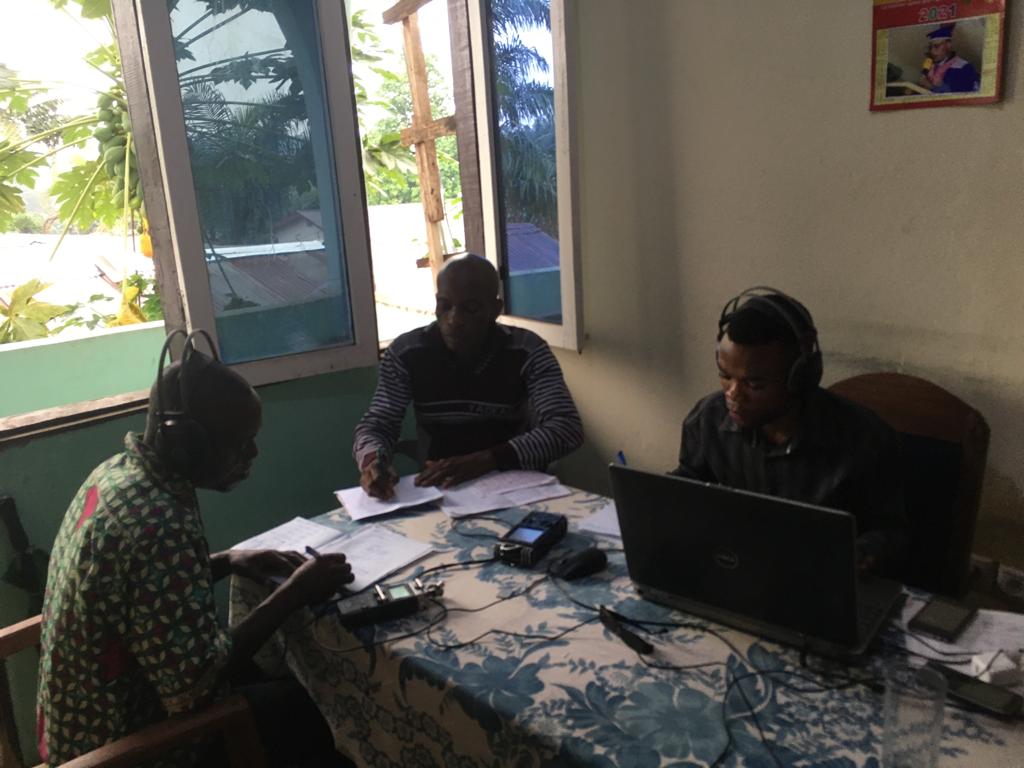
From August 6 until August 30, 2022, Sara Pacchiarotti & Koen Bostoen are on a BantuFirst mission in the DRC. They mainly stay with Prof. Joseph Koni Muluwa (ISP Kikwit & BantUGent associate) in Kikwit where they are doing linguistic fieldwork on several West-Coastal Bantu languages, most notably Eastern and Western Ngwi (B861). They also teach classes in Methods in Linguistic Research (Sara) and Comparative Bantu Linguistics (Koen) at the MA1 students of the English and African Cultures program at the Institut Supérieur Pédagogique de Kikwit. In Kinshasa they work with Prof. Jean-Pierre Donzo Yugia (ISP-Gombe & BantUGent associate) on other West-Coastal Bantu languages, mainly Northern Boma (B82).
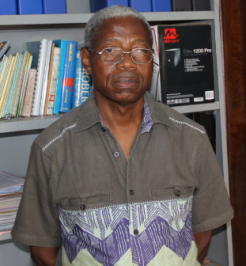
BantUGent deplores the death of Prof. Timothée Mukash Kalel
In the morning of Monday August 15, 2022, Prof. Timothée Mukash Kalel (1946-2022) passed away at the Munkole hospital in Kinshasa at the age of 75. He was a lecturer at the Institut Supérieur Pédagogique of Kikwit and Kikwit University (UNIKIK) before leaving for Paris, where he obtained his PhD degree in Linguistics at Université Paris III, Sorbonne Nouvelle in 1982. Later on he became a professor in African Linguistics at the University of Kinshasa (UNIKIN), where he mainly taught and did research on the syntax of Bantu languages. He is well-known for the research he did on his first language Kanyok on which he published several works, amongst others Dictionnaire kanyòk-français (2012) and Essai de grammaire kanyòk, L32 : phonologie, morphologie, syntaxe (2013). Between 1995 and 2005 he was the Permanent Secretary of the Congolese Observatory of Languages and since 2006 he had been the General Commissioner of the African Languages Festival in the DRC. On April 22, 2022, we were happy to welcome him as an online external assessor during the PhD defense of Michel Onokoko at Ghent University. BantUGent deeply regrets his passing and expresses heartfelt condolences to Prof. Mukash Kalel’s family on their loss.
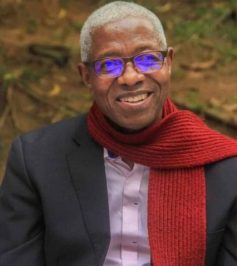
BantUGent mourns the passing of Prof. Georges Kamba Muzenga
Prof. Georges Kamba Muzenga (1942-2022) passed away on August 5, 2022, in Brussels at the age of 80. The field of Bantu Studies loses a great historical-comparative linguist. After having graduated in classical philology at the Catholic University of Louvain, Georges Kamba Muzenga obtained a PhD in African linguistics at the University of Brussels (ULB) in 1978. He was a professor at the Institut Supérieur de Lubumbashi, where he served for a while as General Academic Secretary. He also taught at Lubumbashi University (UNILU). Apart from numerous articles on different topics in Bantu historical-comparative linguistics, he wrote several books such as Esquisse de grammaire kete (1980), Les formes verbales négatives dans les langues bantoues (1981), Substitutifs et possessifs en bantou (2003). In 2018 he participated in the International Conference on Reconstructing Proto-Bantu Grammar at Ghent University. His talk on Proto-Bantu substitutives and possessives can be relistened here. BantUGent expresses heartfelt condolences to Prof. Kamba Muzenga’s family on their loss.
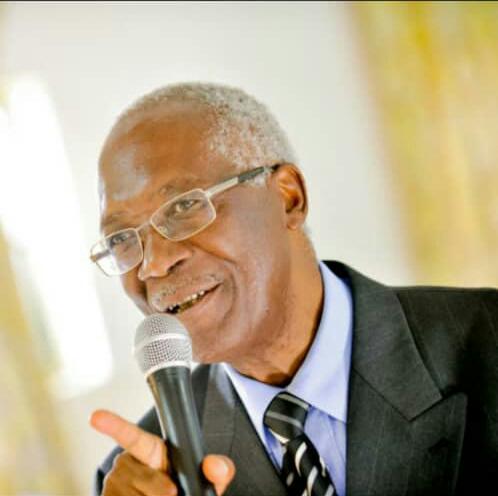
Minah Nabirye & Gilles-Maurice de Schryver present the first Bantu language monitor corpus at EuraLex 2022 (Mannheim)
At Euralex 2022, Minah Nabirye (BantUGent) and Gilles-Maurice de Schryver (BantUGent) present the first monitor corpus for a Bantu language, and show how it can be used to detect neologisms (both new words and new meanings) in Lusoga. The recording is available here.
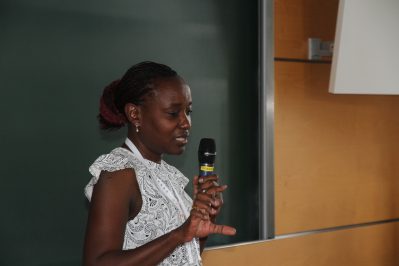
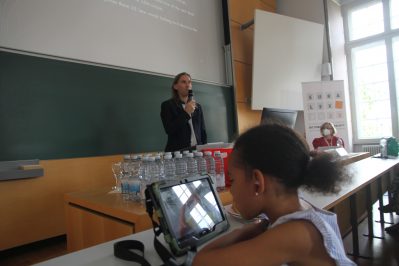
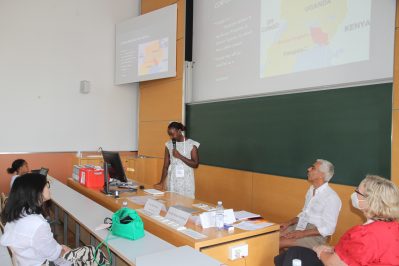
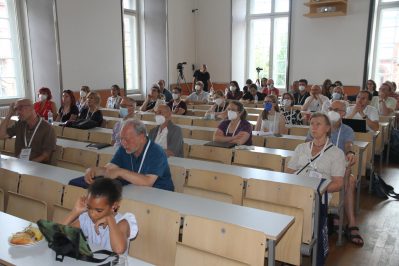
Inge Brinkman and team obtain five-year VLIR-UOS grant for a project on Kenya and Ethiopia
For the coming five years (September 2022- August 2026), Inge Brinkman (BantUGent, African Studies, Ghent University), Teshome Mossissa (Institute of Oromo Studies, Jimma University) and Peter Wasamba (Department of Literature, University of Nairobi) will be the promotors of the VLIR-UOS Team-project titled “STORYTELLING AND YOUNG PEOPLE COPING WITH CRISIS: ORAL NARRATIVES AND CRISIS MANAGEMENT IN KENYA AND ETHIOPIA“.
Following Team-members will join the project:
- James Wachira (Post-Doc researcher and coordinator, University of Nairobi)
- Milkessa Edae (Ph.D. candidate, Jimma University)
- Hellen Kagotho (Ph.D. candidate, University of Nairobi)
- Megersa Regassa (Ph.D. candidate, Jimma University)
- Gerti Wouters (Team member, Media, Head Journalism Dept., HoWest, Belgium)
- Kimingichi Wabende (Team-member, Applied Theatre, University of Nairobi)
- Nega Jibat (Team-member, Sociology, Jimma University)
This project is focused on ‘Oral Literature for Development’ (OL4D) as a new line of thinking. It introduces OL4D firmly based on the belief that culture and creativity are central for all people’s development. The team sees huge potential in the cultural-historical ways in which people have dealt with crisis situations through their history of literary expression, but at the same time it is reckoned that many adolescents, especially in urban contexts, in Kenya and Ethiopia do not connect to this literary history when faced with crisis situations. Through performative learning procedures the project aims at enabling young people to engage with living oral traditions of storytelling, thereby reflecting on the potentialities of crisis management.
The new project will focus on five domains in the narratives, namely:
1) Gendered crisis situations;
2) Othering and exclusion;
3) Poverty;
4) Disease;
5) Ecological crisis.
The new project views the practical and goal-oriented (re)connection with oral narrative genres as part of a decolonisation process, whereby academic and developmental models are opened up to include alternatives through indigenous epistemological models. It will in practice:
1) organise an interuniversity Oral Literature for Development Hub (OL4D-Hub);
2) engage elderly and young performers/audiences in live performances and workshops;
3) create an intermedial educational tool on oral storytelling and crisis management;
4) exchange on research and education on Oral Literature for Development in a South-South-North cooperation.
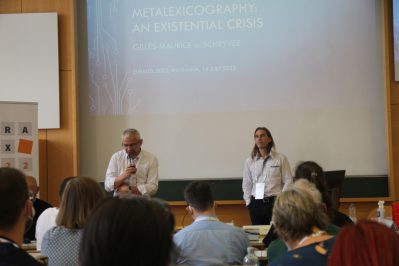
Gilles-Maurice de Schryver assesses existential crisis of metalexicography at Euralex 2022 (Mannheim)
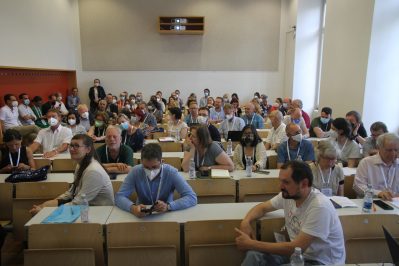
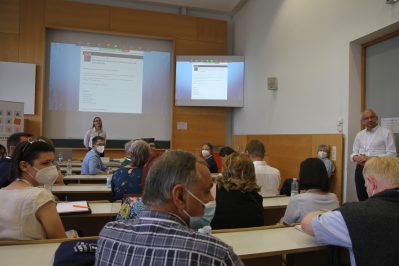
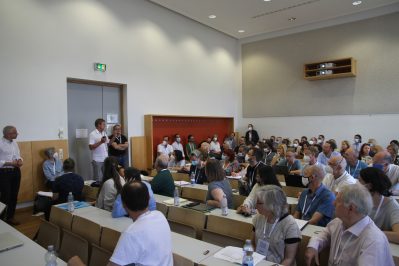
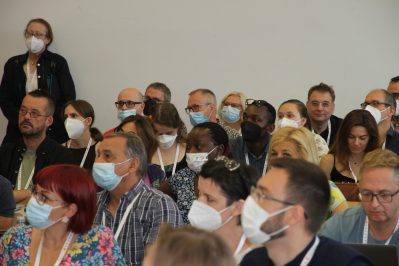
At Euralex 2022, Gilles-Maurice de Schryver (BantUGent) presents his results on the crisis (or not?) in which metalexicography currently finds itself to a packed audience in Mannheim and more online.
Hilde Gunnink publishes “A grammar of Fwe” with Language Science Press
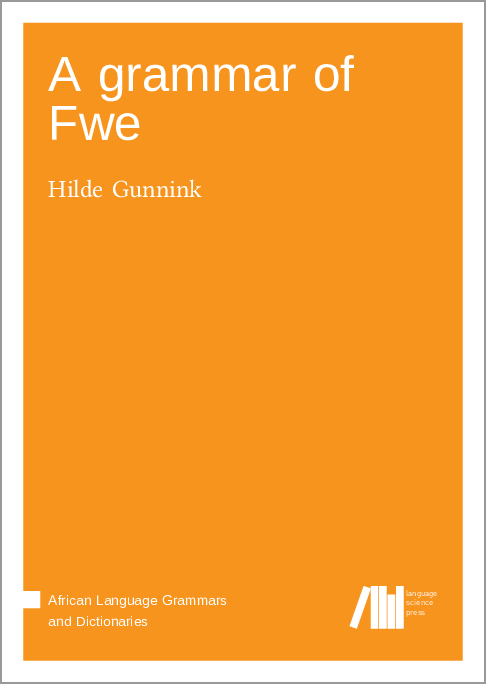
Language Science Press has recently published A grammar of Fwe by Hilde Gunnink (BantuGent). This book is the published version of the PhD thesis she defended at Ghent University in 2018. The new grammar is volume 6 of LSP’s African Language Grammars and Dictionaries series and is fully downloadable here in open access.
This book provides a first-ever comprehensive overview of the grammatical structure of Fwe. Fwe is a Bantu language spoken on the border between Zambia and Namibia, by some 20,000 people. Very little previous documentation exists on the language, and the current description of Fwe is based exclusively on newly collected field data. It includes an analysis of the grammatical structure of Fwe, followed by basic cultural information on greetings, a Fwe narrative with its English translation, and a lexicon comprising some 2200 Fwe lexemes with their English translation. This book is intended as a resource for linguists, whether interested in African languages, Bantu languages, language typology, or general linguistics.
Minah Nabirye and Gilles-Maurice de Schryver release book dedicated to Busoga history
Minah Nabirye (BantUGent) and Gilles-Maurice de Schryver (BantUGent) have recently released with Menha Publishers a new book titled “Enkaana. Fieldwork Texts Compiled by David William Cohen on the History of the Basoga people“. More information on the book can be found here.
